

Why is my dog doing that?
Unwanted behavior rarely starts without a reason. Destruction, jumping, barking, and lunging are usually a dog's response to something happening around it — a person approaching, a noise, a change in routine, or an earlier experience that still matters.
Behavior modification work starts by identifying the trigger for each behavior. Once the trigger is clear, a training regime can be built to manage, diminish, or extinguish the response, and replace it with something more useful for both of you.
Some behavior is fear-based or anxiety-driven. That kind of work asks for patience and often a change in the household routine or a shift in how the owner responds, so training and lifestyle have to be adjusted together rather than separately.
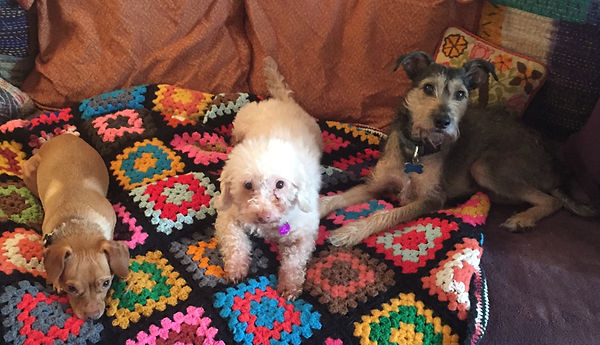
Behaviors we work on
Each case starts with an assessment of the situation around your dog, not the symptom alone.
- Destruction of furniture or belongings
- Jumping on people
- Excessive barking
- Lunging toward people or dogs
Not every behavior fits one label. A dog that pulls on leash, rushes through doors, or cannot settle may need the same kind of root-cause work, so tell me what you are actually seeing at home and out in public.

How the work is structured
- Find the triggerWe look at what happens right before the behavior appears: the setting, the people present, what was said or done, and what the dog did next.
- Build the training regimeA set of exercises is put in place to manage the behavior in the moment, then to diminish or extinguish it over time.
- Work with fear and anxietyWhen the behavior comes from fear or anxiety, the plan accounts for that directly rather than treating it as disobedience.
- Adjust the householdPart of the change often lives outside formal sessions: lifestyle changes and mindset adjustments for the owner, so the new behavior holds up between lessons.
Where behavior work fits
| Service | What it covers | Who it suits |
|---|---|---|
| Dog Training | Communication tools for a positive, rewarding lifelong relationship | Owners building good manners at home and in public |
| Basic Obedience | Structured obedience work for dogs from 8 weeks to 18 years | Puppies through adult and senior dogs |
| Behavior Modification | Trigger identification and training regimes for specific behaviors | Dogs showing fear-based or anxiety-driven responses |
| Board & Train | An extended, intensive training program | Dogs needing concentrated time with a trainer |
| Pet Sitting | One-on-one attention at your home or the trainer's home | Dogs that settle better in a home environment |
A note from Andrea Singer
Doggy Decorum CA is aimed at educating dog owners on how to effectively communicate with their dog, providing simple tools that result in a positive and rewarding lifelong relationship. Behavior work follows that same principle: the tools come first, the results follow.
All behavior cases are handled personally by Andrea Singer, who previously lived in NYC, studied with Renee Payne of Doggiecouch.com in Brooklyn, NY, and volunteered at adoption shelters and fostered dogs along the way.
Unwanted behavior in dogs rarely appears out of nowhere. Destruction, jumping, barking, and lunging are almost always responses to something nearby — a stranger approaching on the sidewalk, a sudden noise, a shift in routine, or a past experience that still shapes how the dog feels. Behavior modification begins by digging into the reason behind the reaction, because training a dog through a symptom it does not understand rarely produces lasting results. Understanding the trigger makes it possible to build a realistic, humane plan around the individual dog's learning history and emotional makeup.
Once the trigger for each behavior is clear, a structured training regime can be developed to manage, reduce, or replace the response with something a dog and owner can actually live with. This work relies on evidence-based methods and positive reinforcement rather than force or intimidation, so the dog learns to communicate and cooperate rather than to shut down or become overwhelmed. Techniques are adapted to the dog's abilities, breed tendencies, and environment, and progress is measured patiently over time rather than forced into quick results.
Many families arrive feeling stuck after years of barking at mail carriers, pulling on leash, jumping on visitors, or reacting to other dogs, and some have already tried classes without seeing the change they hoped for. A behavior modification program offers a different starting point: assessment first, then targeted exercises that fit daily life in Virginia Beach, Norfolk, Chesapeake, and Portsmouth. The goal is a healthier relationship between humans and their companions, where manners in public feel natural, stress stays manageable, and the bond between dog and owner strengthens.
Talk about what your dog is doing
Describe the behavior, where it happens, and what the dog was focused on right before. From there we can talk through whether behavior modification is the right starting point.